
Water damage to homes is a major concern among homeowners, especially if the damage comes after a particularly rough
storm. This can be due to the water flow leading into the home from excess water on the home’s exterior, a leak in
the foundation, or other damage done during the storm.
So, what should you do if you suspect your home may be suffering from water damage? Here are a few common questions
to help point you in the right direction.
How does water damage homes?
Water can damage homes in a plethora of ways. Burst pipes during the winter months can lead to lofty plumbing system
repairs. Likewise, flooding from a storm may do significant damage to your foundation and walls by causing sagging,
swelling or mold and mildew growth.
What are signs of water damage in a house?
Warping foundation walls, damp smells, mildew growing along your home’s seams, continued dampness and observable wet
spots are some of the more well-known signs of water damage.
However, other signs also include softer walls, bubbled paint, running paint colors and observable signs of water
leaks within your walls – such as trickling or full-blown running from pipes.
How do you prevent water damage from spreading?
You can keep the damage from spreading by finding the immediate source of the problem and isolating it. Once
isolated, push your perimeter out more to isolate the surrounding area. Use a tool, like a sump pump, to remove the
water from the area. If you have items in the damaged location, move them to a dryer location if possible.
Once you’re sure the cause has been removed, and you’ve gotten rid of the surrounding water, ensure there’s enough
air flowing through the area to properly dry it out. To ensure you stunt mold growth before it becomes a problem,
sanitize the area. Mold inhibiting sprays may also help.
Have an inspector visit the area and inspect the entire house to make sure no areas were missed for standing water
and there are no slow leaks. If any issues are found, your inspector should be able to direct you on the best next
steps.
Can water damage in a home be fixed?
The good news is, most damage caused by water can be fixed if caught in time and if the home hasn’t suffered any
structural damage. While those can be fixed with time, they often require construction and permits.
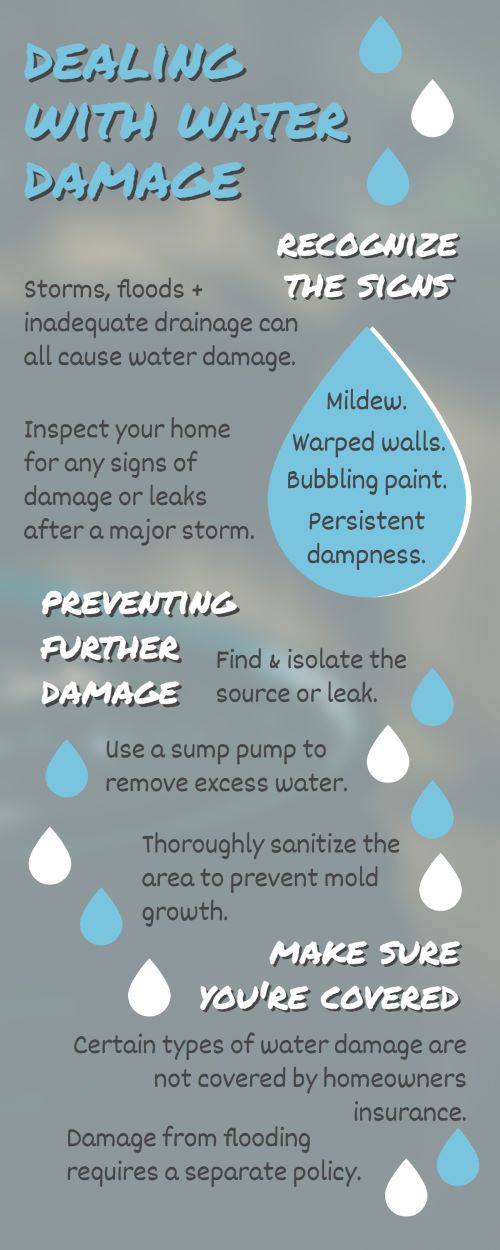
If you encounter damage from a storm, be sure your homeowners insurance policy covers damage from general water
leakage, flooding and other water-oriented issues. Many policies will require additional insurance to ensure the
damage is properly taken care of, such as additional flood insurance.